









West Virginia is ancient, its legends and lores older than the history books.

As Native American and colonist tensions rose during the westward expansion, West Virginia—particuarly the area of Point Pleasant—had a front-row seat to numerous disputes and battles. One of the most famous stories to come from this time was that of Chief Cornstalk, a Shawnee chief who remained dedicated to staying neutral during the American Revolution.
As the story goes, Chief Cornstalk went to Fort Randolph in 1777 to alert American forces that the British army had made attempts to recruit the Shawnee to fight for their side. Chief Cornstalk, among others in attendance, was immediately arrested and held prisoner. Tensions continued to rise between all parties, leading to the eventual murder of the chief and three others—one being his son.

Before he died, Chief Cornstalk cursed the land and those who inhabited it. Some say it’s this very curse that has contributed to some of the area’s deadliest disasters, such as chemical spills, explosions, flooding, and even the infamous Mothman appearances that would precede the collapsing of the Silver Bridge.
In the early 1900s, a string of mysterious deaths and disappearances left the community of Booger Hole in Clay County concerned and worried. Among the stories is that of the elderly Lacy Ann Boggs, who claimed that she could light the pipe she often smoked and, before it was out, take you to the body of Henry Hargis, a local stonemason killed not long before, hinting that she knew who—or what—did it. She was found dead from a gunshot wound in her home soon after these claims were said to be heard.
A neighbor was arrested for Boggs’ murder. After he accused Boggs of bewitching him to use him as a horse for traveling—and potentially because of a lack of evidence—the man was released from the charges. Years later, after another death and no true answers, a mob of Clay County residents formed and threatened to hunt down the killers themselves if they did not leave. Things were calm after that—aside from a few understandable hauntings.

George Van Meter was a German immigrant in the 1800s who settled in what was then Dorcas Hollow—though we know it today as Petersburg. He and his family had a thriving farm on their quiet piece of paradise. Life was good—until it wasn’t.
Huron Indians ransacked the small community, making their way to Van Meter Farm. The family patriarch, working outside when he spotted the intruders, told his son to take the rest of the family and run. Van Meter stayed behind.
When help eventually arrived, the farm was completely destroyed, with only the house’s chimneys still standing. Van Meter’s headless body was found nearby. His head was located the following day in a cooking pot, left by his killers for a gruesome discovery by survivors.
Today, a headless figure is said to wander the farm, aimless yet persistent, in a perpetual search for what was taken.

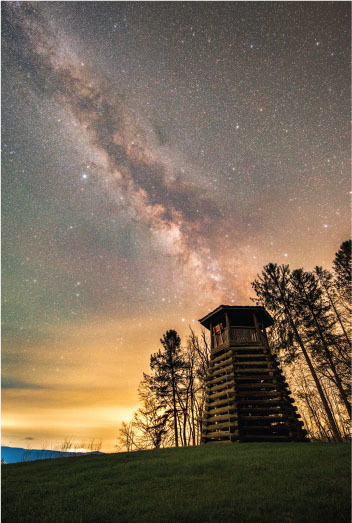
Droop Mountain is a landmark location of the Civil War, so it’s no surprise to hear ghost stories set there.
On November 6, 1863, the Battle of Droop Mountain—one of the largest battles in West Virginia—has been called the end of formal Southern resistance in the state. An estimated 400 soldiers died, and many are said to still haunt what is now Droop Mountain Battlefield State Park.
Apparitions in uniform have been reported, as well as disembodied screams and sounds that can only come from a deadly battle being fought. There have even been stories told of people finding small artifacts on the park’s property and taking them home, only to have spirits and odd occurrences follow them until the items were returned. That’s why it’s probably best to leave anything you find at a state park at the state park—and, of course, because it’s the rules.
READ MORE ARTICLES FROM WV LIVING’S FALL 2025 ISSUE







Leave a Reply