









What started out as a dream turned into one of the biggest racing events in the region: The West Virginia Breeders Classics.

written by Bill Cauley
photographed by Carla Witt Ford
It started out as a whim. It was 1986, and Sam Huff and his longtime partner, Carol Holden, had just come from watching the Maryland Million, a featured horse racing event at Baltimore’s Pimlico Race Course. Huff was impressed with the success of this event. It was a time when the racing industry, and the overall economy in the state, could use a real shot in the arm, and he and Holden wondered why West Virginia, Huff’s native state, couldn’t put on such an event.
Larger tracks across the country seemed to want to push second-tier tracks, such as the one at Charles Town, off the radar. Huff and Holden, both owners and trainers of thoroughbred horses in Middleburg, Virginia, sensed this.

So Huff—a star West Virginia University athlete–turned–Pro Football Hall of Famer whose career as a linebacker with the New York Giants and Washington Redskins spanned decades—thought he could use his pro football and business connections to create a series of races offering large purses, highlighting West Virginia–bred horses and attracting some of the best horses in the Mountain State.
“Sam had the influence and important contacts to get it done,” recalls Holden, president of the West Virginia Breeders Classics. His efforts were successful. He secured the funding for this huge gamble, and the inaugural West Virginia Breeders Classics races took place in 1987 at what is now Hollywood Casino at Charles Town Races—establishing a tradition that, today, supports a vigorous equestrian economy and lifestyle in the region.

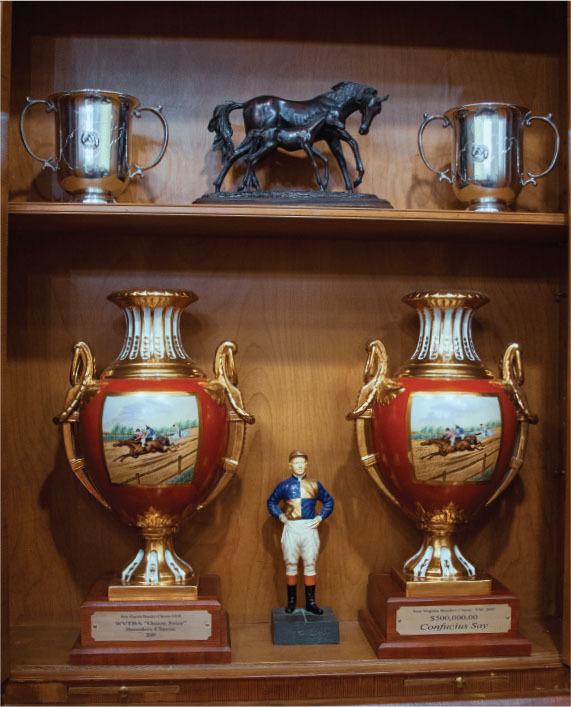
Hot Out of the Gates
“Sam did not want to go to a bank for the initial loan to help fund the project,” Holden says of the first year of the Breeders Classics. “So a special loan of $10,000 was secured from previous owners of the track. The stipulation was that the loan had to be paid back within 10 days of the end of the races.”
Also chipping in for this initial investment was the West Virginia Lottery. Harry Buch, then-chairman of the West Virginia Racing Commission, agreed to match the sponsorship money raised by Huff with $200,000 the commission held in uncashed pari-mutuel tickets.
The Breeders Classics that year featured a five-race card, with a total purse for each race of $25,000. For the main feature race—won by Onion Juice, owned by Charles Wilson Jr. and Donald Wilson—it was $100,000, the first purse of its size in track history. The total amount wagered that day was an impressive $862,000.
The loan was paid back on time.



“I have to admit, I was a little skeptical at first,” says Ted Black, longtime horse racing writer for Charles Town’s Spirit of Jefferson, a weekly publication serving Jefferson County. He remembers the uncertainty of such a venture, the strong possibility that it might not succeed. “There were no real marquee races there at the time,” he says. “It was risky—but it worked out.”
Down the Stretch
“Oh my, I can’t even begin to think what might have happened if it weren’t for Sam and Carol,” says Cyndy McKee, a board member of the West Virginia Breeders Classics. “The credit needs to go to them. It wasn’t easy.”
McKee, who also owns and operates Beau Ridge Farm in Kearneysville, says, as far as she was concerned, the horse racing industry in West Virginia was dying back in the early 1980s. “It wasn’t going to go away completely, but it was certainly hitting a low point.”

She recalls how she and her late husband, John McKee, fearing the worst was coming, purchased a farm in Kentucky during that time so they could relocate and still continue to raise thoroughbred horses. “We wanted to keep our options open.”
Black says he was also aware of other owners of horse farms considering leaving the Charles Town area, thinking the industry was through. “I’m surprised more people didn’t consider jumping ship at the time,” he says. “Things weren’t looking good.”

Everything seemed to be riding on Huff’s big chance. It wouldn’t be long before things started to get easier.
Once the Breeders Classics took hold and its success began to build, the McKees became more relaxed, eventually deciding to remain in the Charles Town area. Meanwhile, word was getting around about this special horse racing event.
Businesses soon moved into the region. More people were relocating to the Eastern Panhandle, and the Charles Town area was growing. “Stores and hotels were opening. Even people who weren’t really horse racing fans were moving into this area,” McKee says. “They still are. They found out it’s cheaper to live here.”
New horse farms sprung up, and local horse farms were also getting bigger. Other businesses eyed Jefferson County for potential expansion. Soon, the county, which was down to one high school, needed two to keep up with the upswing in the population. The prospects for the future looked good.

Challenges for the Classics

When the Breeders Classics first started, the office was located in Middleburg, Virginia, about 30 minutes from Charles Town. Things were pretty informal in those early days, Holden remembers. “Then one day, Sam hands me a checkbook,” she chuckles. “The Breeders Classics actually had its own checkbook.”
But despite its growing success, there were still some dark days ahead for the popular event.
In 1995, management at the Charles Town track threatened to shut the track down. The horsemen were concerned about the size of purses, Black says, as well as the actual number of racing days allotted by the West Virginia Racing Commission. There were also some issues the horsemen had regarding the Classics series itself. Rather than risk losing the Breeders Classics altogether, Huff decided to move the 1995 race to Mountaineer Race Track in New Cumberland in the Northern Panhandle—an “away game,” as he is said to have described it. “Sam just didn’t want to fool with the horsemen that year,” Holden says. “It was easier just to move it for the one year.”


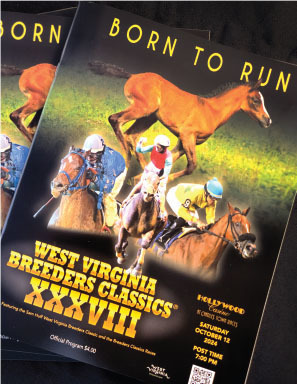
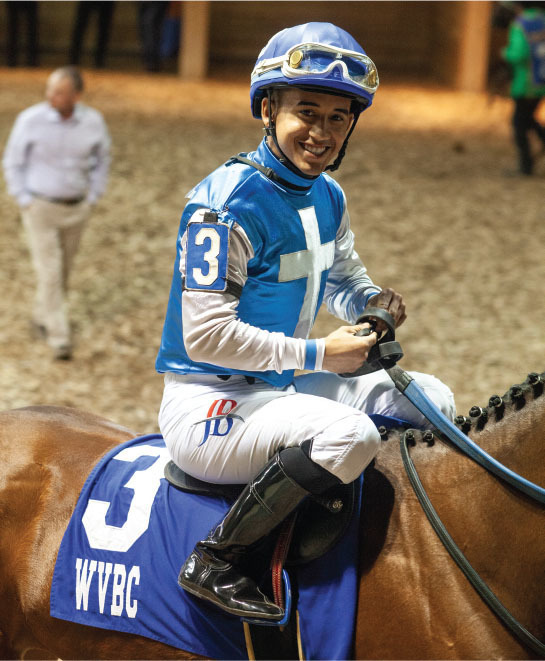
The Classics returned to Charles Town in October 1996 as things were settling down. That November, West Virginia voters approved video lottery terminals for Charles Town Races, following the lead of other racetracks across the region and saving the track—and, ultimately, the West Virginia Breeders Classics.
In 2016, the office of the Classics found its new home in Ranson, closer to the action—and just in time for the next hurdle the event would come up against. When the COVID-19 pandemic hit and shut many things down in 2020, including the casino at Charles Town, adjustments had to be made in order to avoid cancelling the Breeders Classics. The 2020 event went on as scheduled, but with restrictions: the stands were emptier, masks were abundant, and the purses were smaller. “We could only have 600 people at the track,” Holden remembers. “There was also no Gala event that year.” But as if to make up for the year’s challenges, the 2021 event the following year would go on to prove itself as an utter success for both the horses and attendees—a triumphant return to the norm.
Better Than Ever
Even with the Classics’ challenges, Huff’s long shot has continued to pay off. The Eastern Panhandle’s equestrian economy and lifestyle are strong—alongside Beau Ridge Farm, farms that are dedicated to the breeding and training of West Virginia’s most impressive thoroughbred racehorses include Taylor Mountain Farm, O’Sullivan Farms, Grams Racing Stable, and more. And this year, the West Virginia Breeders Classics enters its 39th year, set for Saturday, October 11, 2025, with what is now a 10-race card and purses totaling $1,025,000.
The purses have been impressive over the many years. There has been more than $32 million paid out in purse money, Holden says, a notable economic boost for the region. “Most of the money distributed stays here in the area.”
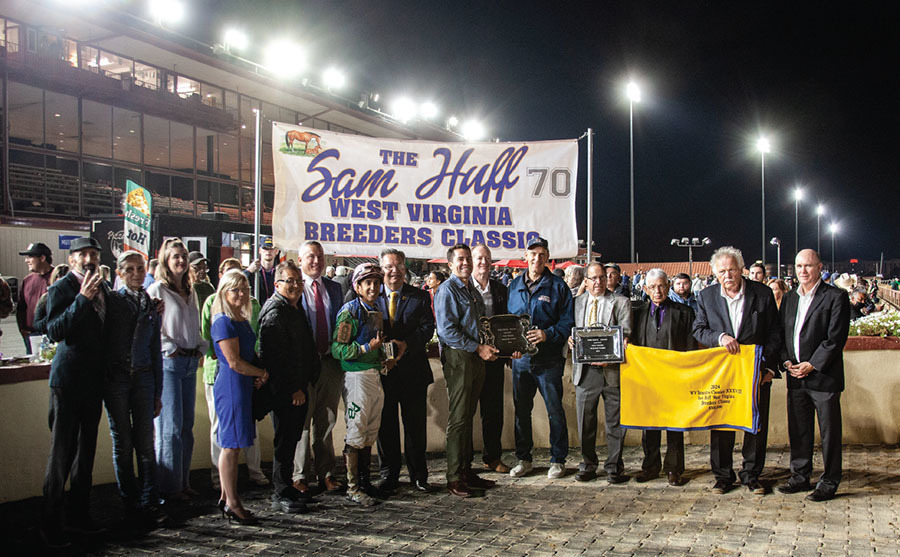
Adding to the hype of this now-signature series at Charles Town, two other events take place in advance of the Breeders Classics. On Friday, October 10, golfers will tee off at the Sam Huff Golf Classic at Locust Hill Golf Course in Charles Town. This annual event raises monies for charities in the region. Some of Huff’s closest friends, including former Redskins players as well as other dignitaries, will be on hand for the tournament.

Later that night, participants will celebrate at the annual West Virginia Breeders Classics Gala in the ballroom at Hollywood Casino at Charles Town Races. Some of the top owners, trainers, jockeys, and high-ranking horse racing officials from across the state, along with members of the state legislative body, are scheduled to attend this star-studded evening.
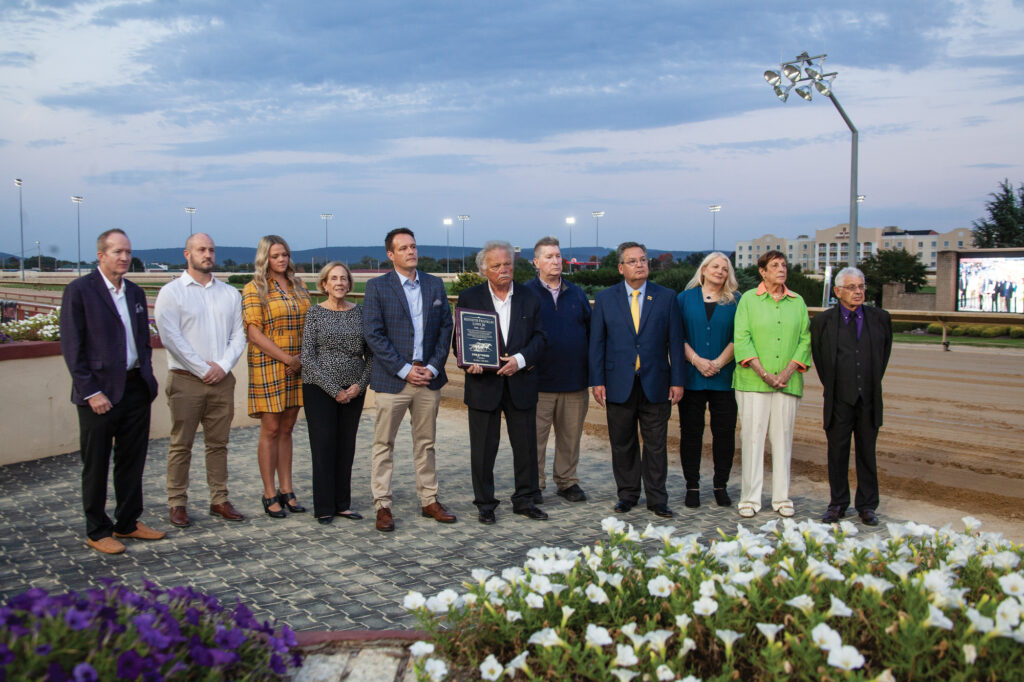
It’s hard to imagine that, not quite 40 years ago, all of this was simply an idea—a thought—from a man who refused to believe that something like this couldn’t be done in West Virginia. The late Sam Huff, who passed away in November 2021 at 87, was a man who never backed down—not as a pro football player, and not when the naysayers of this major horse racing event in West Virginia challenged or questioned it. The featured race of the Classics was officially renamed the Sam Huff Classic before the 2022 event, honoring the man who many believe single-handedly saved horse racing in West Virginia. His grandson presented the trophy.
The West Virginia Breeders Classics seems to have established its home now at Hollywood Casino at Charles Town Races. Its success has not only helped to solidify the economy in the panhandle and in the state, but has also boosted the viability of horse farming in the region.
When the Last Race Is Run
Every athlete deserves a happy, restful retirement—even those of the animal variety. Aftercare Charles Town (ACT) is giving local race horses exactly that.
Created in 2013 specifically for the Charles Town racing community, ACT is a 501(c)(3) nonprofit with a mission to help place ex-race horses in loving homes while also bringing them a new sense of purpose. With the help of various thoroughly vetted partner organizations, ACT and its team work diligently, carrying a shared determination to put the well-being and safety of these remarkable athletes first.
Since 2014, ACT has rehomed more than 450 retired Charles Town race horses, giving them peaceful retirements and new careers outside of the track.
THE Story of a First
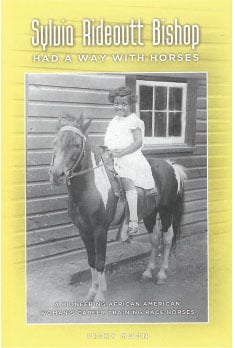
Sylvia Rideoutt Bishop is a name well-known in the horse racing communities of her native West Virginia—and America as a whole.
Born in the small Charles Town community of Potato Hill in 1920, Bishop showed an early interest in horses, starting with a pony. Her fascination with the creatures grew with age and with the horse racing scene throughout the region.
By the age of 14, the itch to follow her passion was strong and persistent, and the Charles Town race track—opened just the year before—was calling her name. She soon found herself swept up in the world of horse racing, first as a groom and hotwalker before rising through the ranks to become a trainer for the track’s stables. Despite the profession’s notoriety as a male-dominated industry, she was determined to find her place within it.
That place wouldn’t be easily available to her. As a young black woman in the ’30s and ’40s, she found obstacles and pushback around every turn. It wasn’t until 1954 that she could look down the straightaway to career fulfillment. After nearly two decades of working the equine creatures as well as studying and practicing to undergo the written and practical testing, Bishop was granted an official license to train horses, becoming the first black woman licensed to train race horses in the United States. Just a few years later, she became the first to train a thoroughbred winner.
Bishop’s career in horse racing spanned decades, with hundreds of horses trained by her hand. She has since been inducted into the Charles Town Races Hall of Fame and is remembered each year during the Sylvia Bishop Memorial Race held at the track.
To learn more about Sylvia Rideoutt Bishop, check out writer, author, and fellow horsewoman Vicky Moon’s 2020 book Sylvia Rideoutt Bishop Had a Way With Horses: A Pioneering African American Woman’s Career Training Race Horses, available on Amazon.
READ MORE ARTICLES FROM WV LIVING’S FALL 2025 ISSUE







Leave a Reply