









Project ECHO brings training to rural clinicians across West Virginia.

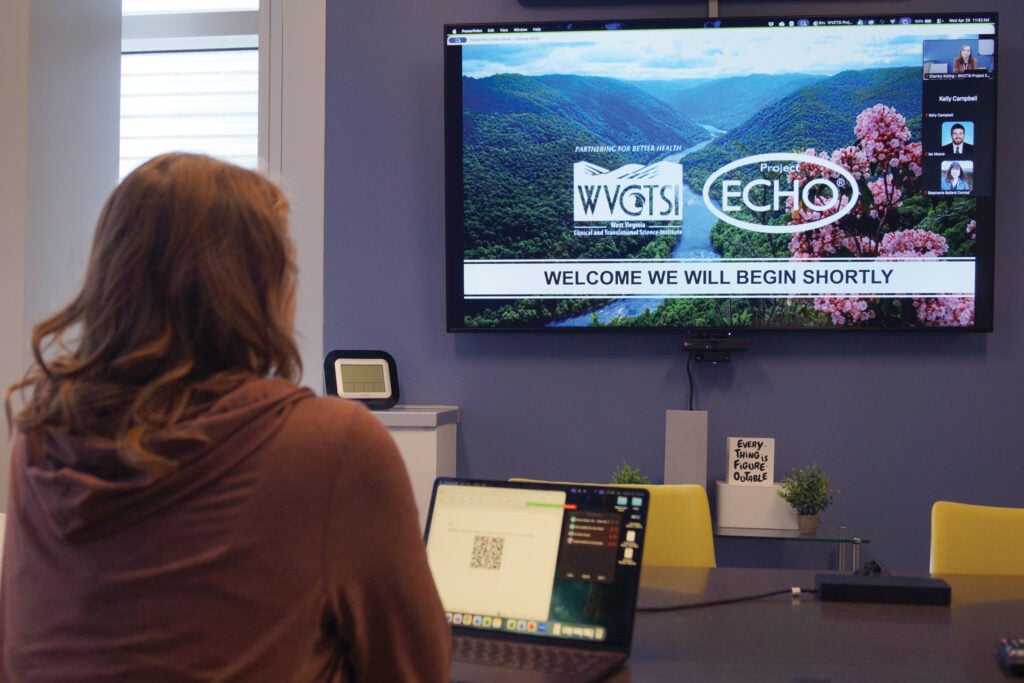
Thanks to an innovative program called Project ECHO—the Extension for Community Healthcare Outcomes, rural West Virginians have local access to specialized care and treatment for complex and chronic conditions. Such conditions include hepatitis C, HIV, cardiac and lung disease, and substance use disorder as well as access to mental wellness and child protective services. In the past, patients would have had to travel to find care, but as a project of the West Virginia Clinical and Translational Science Institute (WVCTSI), Project ECHO offers rural clinicians a no-cost video conference training program.
Now a decade into its tenure, Project ECHO is currently running 10 projects, according to project director Jay Mason. “We’ve done 15,” he says. “The hepatitis C program has been going for 10 years.” And it’s all done through Zoom, he says. “The primary care organizations—doctors, mid-levels, nurses, case managers, anybody that touches care for that specific project area—can join and attend the free sessions. We offer one general hour of continuing medical education credits for each session, and the monthly sessions are an hour. They have subject matter experts on the topic.”
Almost all of the projects have come at the request of groups that approached Project ECHO with needs specific to their communities. “It’s given them access to specialists they haven’t had before, because they’re few and far between in West Virginia,” Mason says.
In addition to care itself, finding transportation in such a rural state can be another significant challenge. In some cases, Project ECHO has allowed clinicians to extend the time they treat patients in the primary care setting before a visit to a specialist is needed. “Those visits can be hard to do,” Mason says. “It’s a long way, and there are long waits.”
While caregivers from other states and countries have participated in the training sessions, recruitment efforts are focused in West Virginia. As a result, a network and a community of practice between the primary care organizations has grown in the state. In many cases, clinics and clinicians are dealing with the same issues but don’t realize it until they get on a video call together.

“If I’m a provider in West Virginia, I feel like I’m connected,” Mason says. “I’m getting the right information and trying to do the very best I can for that patient population.”
For more information, visit wvctsi.org/wvprojectecho









Leave a Reply