









Alderson’s federal prison camp is nearing its 100th year of operation.
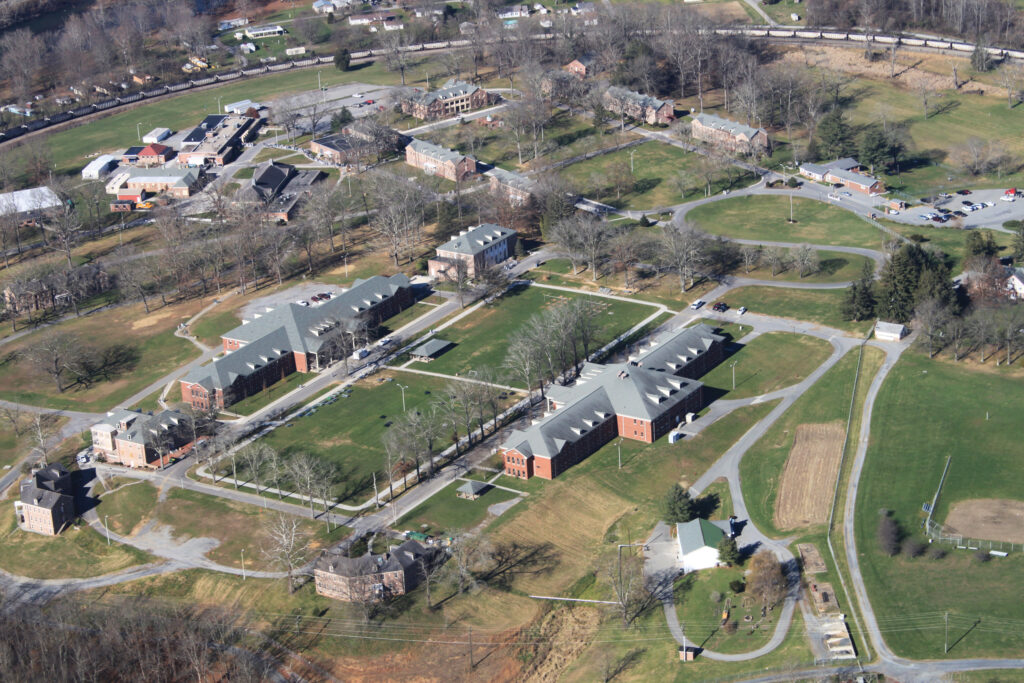
ON APRIL 30, 1927, after a congressional act and nearly $2.5 million, the Federal Industrial Institution for Women—modernly known as Federal Prison Camp Alderson—received its first three female inmates. The formation of the Federal Bureau of Prisons followed a few years later, and by the end of 1928, the Alderson prison was a temporary home to more than 150 incarcerated women.
At the time it was being built, there were no federal prisons for women in the country. Female offenders convicted of federal crimes—of which there were few—were instead placed where there were empty beds in state or local facilities, often in unsafe conditions. “At the time, very few women were arrested and prosecuted, especially at the federal level,” says Margaret Hambrick, an Alderson native, former supervisor of education for FPC Alderson, and former regional director for the Federal Bureau of Prisons. Bootlegging was a common federal offense in the early 1920s, but women weren’t often sentenced to federal prison time, and most facilities weren’t prepared to house them. “Women were not seen as criminally minded but more as victims of their male counterparts,” Hambrick says. “But as society changed and women were more involved in criminal activity and got prosecuted, then there were more women in the federal criminal justice system. Female prisons were needed to try to keep those women close to home and in a safer and more constructive environment.” The town of Alderson was ideally located near the East Coast, in close proximity to many major population centers and on a major railroad line, making it easy to transport offenders and for them to receive visits from visit loved ones.

The facility was built to follow a “cottage plan,” a style popular for women’s and minimum-security facilities. “The cutting edge of criminology of the time was to make the prisons more reflective of a ‘normal’ environment—learning trades, participating in the environment, etcetera,” Hambrick says. This is often the norm for federal prison camps, focusing on a work-oriented approach and rehabilitation. The cottages were eventually closed in the ’90s after two dormitories were built for more efficient population management.
Over the years, FPC Alderson has seen its fair share of notable inmates, such as jazz singer/songwriter Billie Holiday, former Manson Family member Lynette “Squeaky” Fromme, attempted President Gerald Ford assassin Sara Jane Moore, and, in recent memory, TV personality Martha Stewart. It has remained a female-only facility, described by Hambrick as a great place to learn and grow—for both inmates and staff. “Alderson has been more in favor than out of favor,” she says. “Prisons are really a reflection of society’s approach to law enforcement and criminal behavior. It has nothing to do with the prisons—they are really reactive and take what comes down the pike.”

Asked what has allowed FPC Alderson to serve a century of incarcerated women, Hambrick gives the credit to the people. “The quality of the staff, of the people in this area, and their ability to work with people from other cultures and different mindsets to give them respect and help them learn made all the difference,” she says. “We had really good people working there who were able to not be judgmental, to work with and meet the inmates where they were and help them grow and prepare for society.”

READ MORE ARTICLES FROM WV LIVING’S SPRING 2026 ISSUE








Leave a Reply