Register for the state’s 14th annual mushroom foray August 7–9, 2026, to exercise mindfulness and experience the magic of mushrooms.
written by LANEY EICHELBERGER
photographed by NIKKI BOWMAN MILLS
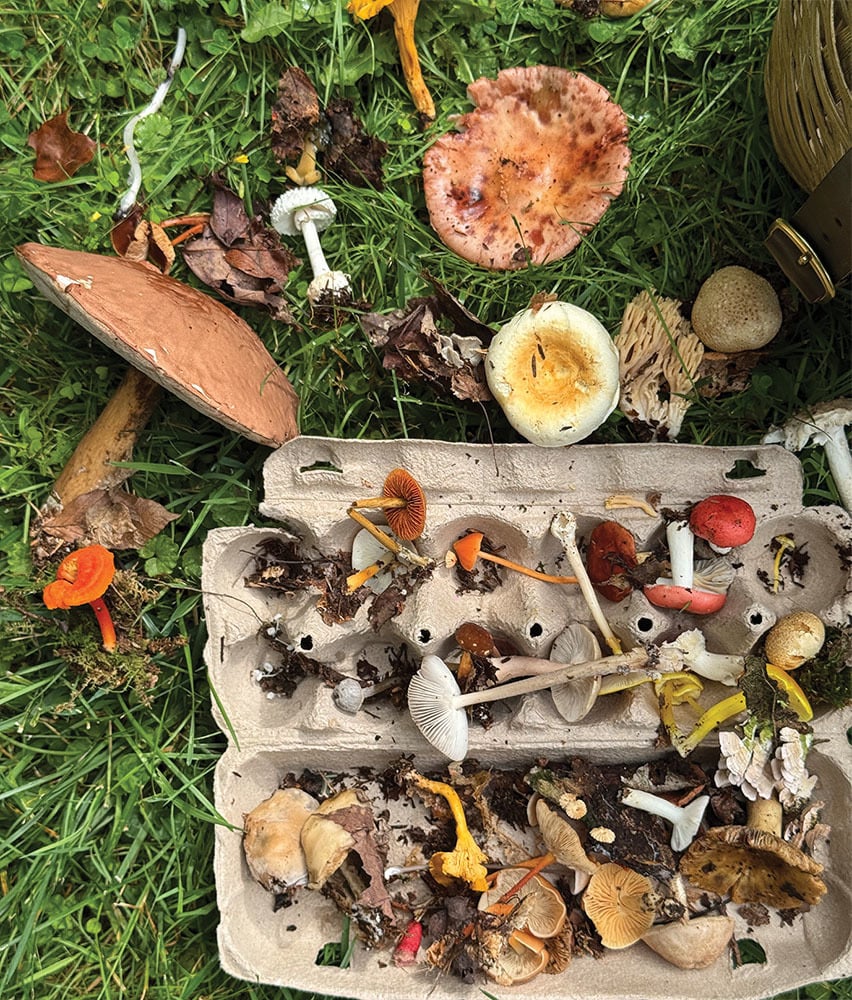
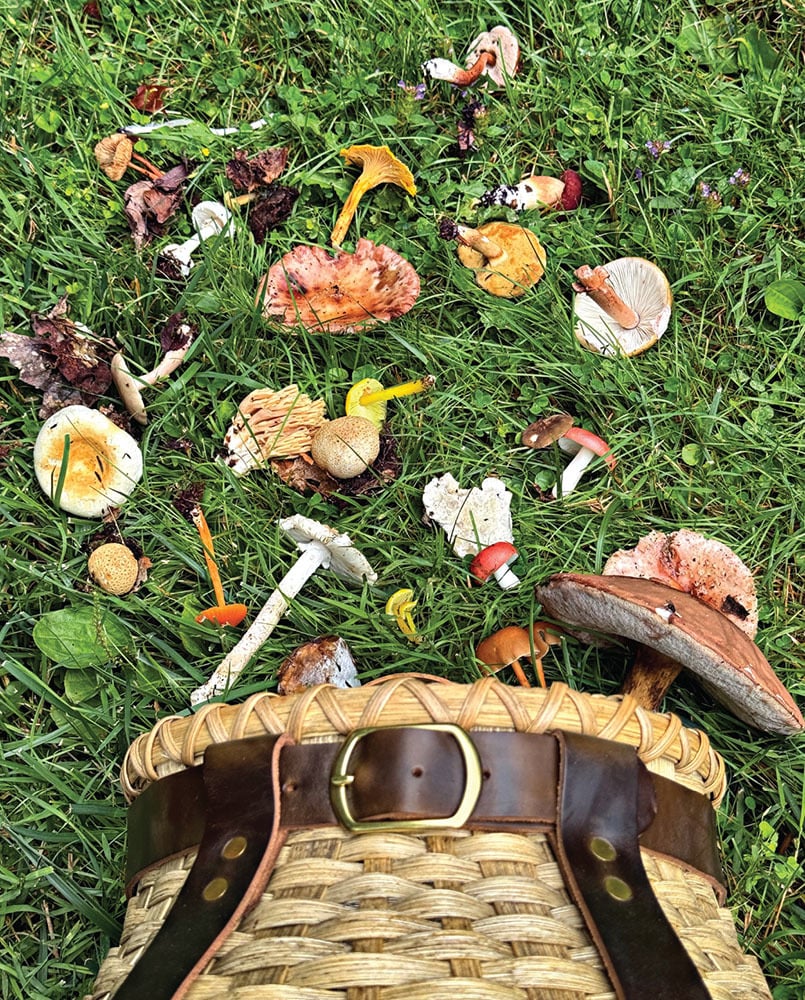
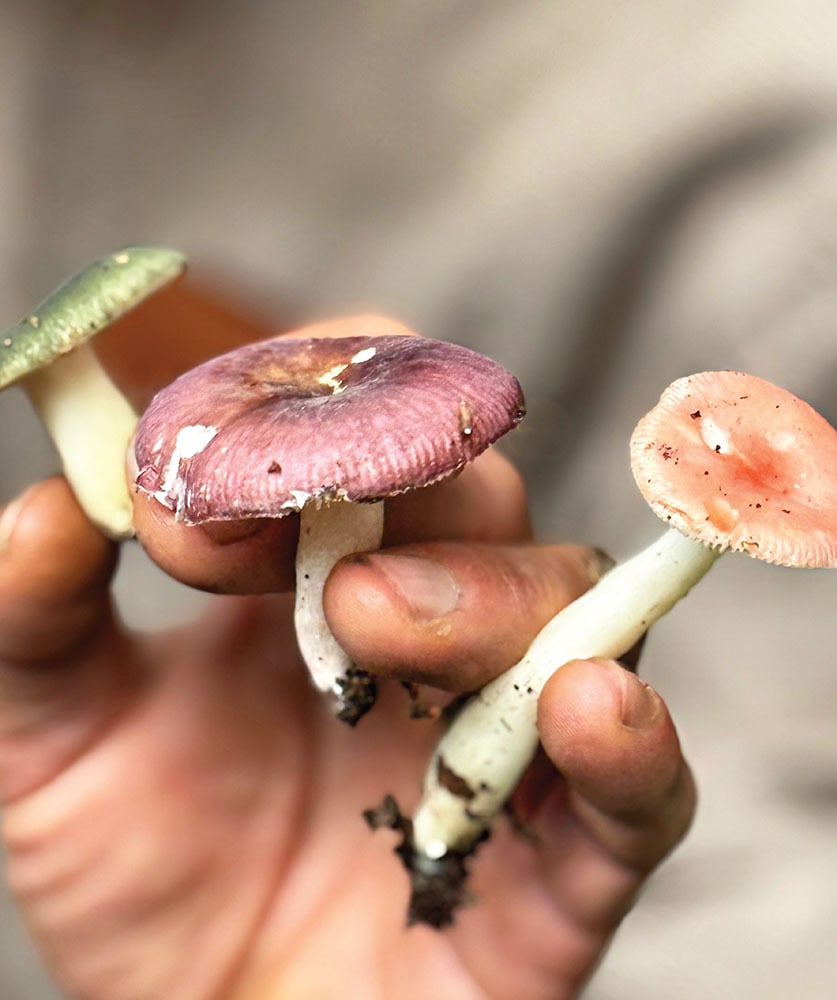
They come in shades of fiery red, pumpkin orange, and canary yellow. Textures range from spongy to wrinkled to velvet-like. Some are barely larger than your fingernail, while others span your whole head. Eat one, and you’ll have the culinary encounter of a lifetime. Eat another, and you just might drop dead. The world of mushrooms is colorful, tasty, and sometimes dangerous. That’s why the West Virginia Mushroom Club (WVMC) hosts its Annual Foray at Blackwater Falls—to encourage celebration of and careful interaction with the fantastical life forms known as fungi.
Prior to 1969, mushrooms were thought to be odd plants that liked breaking the rules: They didn’t need sunlight, and they could inexplicably materialize overnight. But even since fungi were awarded a biological kingdom of their own, they remain enigmatic. For disciples of the outdoors like Chip Chase, the intrigue of mushrooms has evolved beyond scientific motivations—it’s become a folk art.
Take his copy of Mushrooms of West Virginia and the Central Appalachians by William Roody as evidence: Dog-eared pages are worn and taped together in places. Margins are filled with notes in varying ink colors, legible only to their author. A book purist might faint at the sight, but to the trained eye, it’s a symbol of years spent studying—not at an educational institution, but under the wizened hemlocks and maples of the Mountain State.
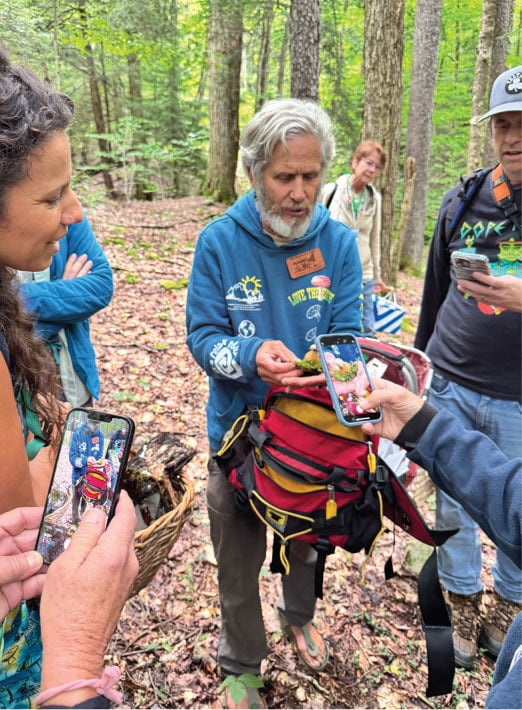
“Certain mushrooms grow near certain trees, in certain soils, under certain weather conditions. When you’re collecting mushrooms, it makes you slow down and appreciate things more,” says Chase. “You end up needing to look at the forest in a different way. You say, ‘Hey, there are trilliums,’ ‘Hey, there’s some moss,’ ‘Hey, look at these ants.’ You just start noticing everything.”
That experience is why the WVMC regularly invites Chase to guide mushroom walks at the Annual Foray. This year, he’ll lead participants through the park’s upland forest in search of specimens fit for foraging—of which there are plenty. West Virginia and the broader Appalachian region are hot spots of biodiversity, offering some of the greatest landscapes for mushroom reconnaissance. Chase puts it simply: “Mushrooms need trees and they need moisture. Well, we have those two things.”
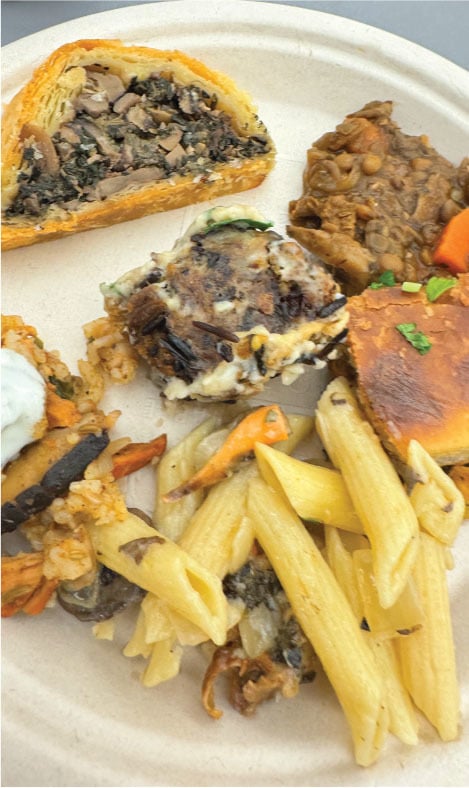
On a stroll through the Mountain State’s forests, hundreds of natural wonders can easily go unnoticed. Not under Chase’s watch. You’ll learn to slow down and spot everything from morels to milk caps to chicken of the woods. Bring your haul back to the lodge and listen to a mycologist discuss the gathered specimens. Then comes the long-awaited feast: a mushroom tasting dinner prepared by White Grass Cafe. Pizza, pot pies, meatballs, bourguignon, and more—all made with mushrooms locally grown or foraged.
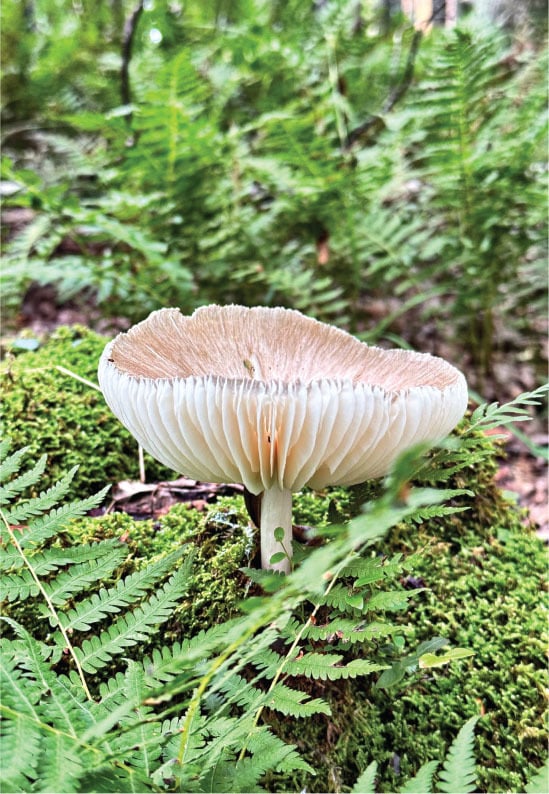
Between nature walks and fungal fare, you can register for expert-led workshops on fungus identification, mushroom mocktails, experimental photography, oyster mushroom cultivation, and fermentation processes like koji and tempeh. Once your noggin’s about ready to burst with newfound knowledge, kick back Saturday evening for a special fungal operetta by the String Beings, then don your best fungal fashion for the inaugural Puff Ball.
Whether you’re a newbie or a seasoned naturalist, there’s something for you to learn and love at the foray.

“The more you learn, the more you realize you don’t know. It opens the door for curiosity and passion,” says Chase. “Even when you’re observant, you’ll still miss so much. That’s the magic of being a human on this Earth, is that it’s endless. Anybody who knows anything knows that you can never know it all—and that’s what keeps us learning.”
wvmushroomclub.net, @westvirginiamushroomclub on FB
READ MORE ARTICLES FROM WV LIVING’S SUMMER 2026 ISSUE


















Leave a Reply